Roof waterproofing in Manhattan: coatings, membranes and parapets
- NYC license 2135523-DCWP
- Free estimates
- 24/7 leak calls
- Written warranty on new roofs
Short answer: We waterproof Manhattan flat roofs, parapets and bulkheads. Sometimes that’s a coating over a sound roof, sometimes new flashing and a new membrane, and sometimes the honest answer is that the roof needs replacing. A coating works on a roof that’s dry, drains properly and has its seams and flashing in good shape. It doesn’t fix wet insulation, ponding or open seams. Estimates are free.
What we waterproof on Manhattan roofs
- The flat roof surface: coatings or liquid-applied membranes over a sound roof, or a new membrane where the old one is past saving.
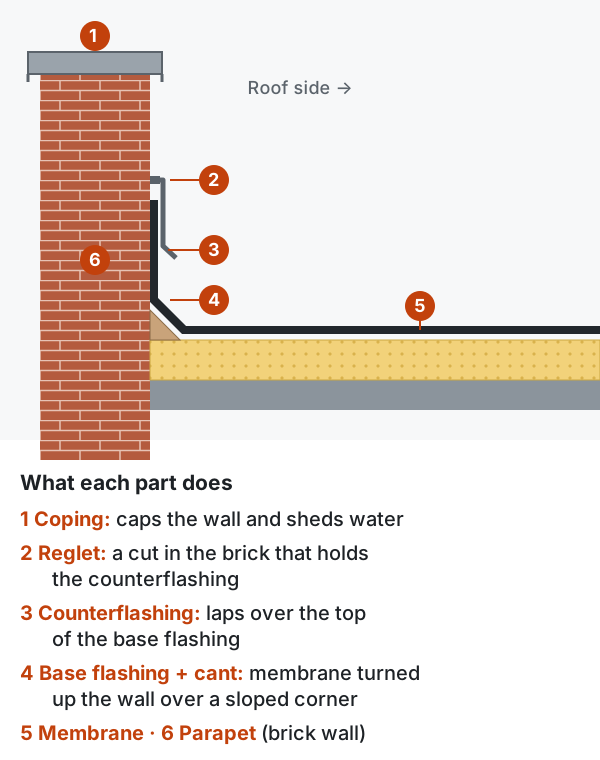
- Parapets and coping: the inside face of the wall, the base flashing, and the joints on top. Water that gets into a parapet shows up inside as damp plaster on the top floor.
- Bulkheads and hatches: the walls of the stair bulkhead and the door threshold take a lot of wind-driven rain.
- Penetrations: pipes, vents and equipment curbs, each sealed and flashed.
- Terraces and roof decks. We waterproof terraces and roof decks under pavers or decking, including the drains and door thresholds that usually cause the leaks. See roof decks and terraces.
Coating, new membrane or replacement?
The right fix depends on the roof underneath, not on the product.
| What the roof looks like | What usually makes sense |
|---|---|
| Dry, drains within two days after rain, seams and flashing tight, surface worn or cracking on top | A coating can add years and reflect heat |
| Sound overall, but flashing failing at parapets, bulkhead or pipes | Repair the flashing first, then coat if the surface needs it |
| Water standing for days in the same areas | Fix the drainage first. A coating over ponding fails early |
| Soft or spongy spots, wet insulation, blisters across the roof | Replace the wet sections or the roof. A coating seals the water in |
| Two or more old roofs stacked, leaks in many places | Replacement. The code doesn’t allow another roof over two or more existing ones |
Send us photos of the roof after rain, the seams and the parapets, and we’ll tell you which row you’re in. Our flat roofing page and roof replacement page cover the other options.
When a coating is the wrong fix
Coatings get a bad name because they’re often sold to roofs that need something else. Skip the coating, or fix these first, when:
- Water ponds. The NYC Building Code expects every flat roof, liquid-applied ones included, to drain within 48 hours after rain. A coating doesn’t change the slope.
- The insulation is wet. A coating on top traps the moisture. The roof keeps rotting underneath and blisters come back.
- Seams are open or the membrane is torn. They need a real repair, not paint.
- The flashing is failing. Most leaks are at the walls and pipes. Coating over cracked flashing hides it for a season.
- The roof is near the end anyway. Money spent on a coating this year is money not spent on the replacement you’ll need next year.
Our rule of thumb: if we’d have to repair more than a small part of the roof before coating it, the money is better spent on the roof itself.
Types of roof coatings and liquid membranes
- Acrylic: water-based, usually white and reflective. Works best on roofs that drain well.
- Silicone: holds up better where some water sits after rain. Later repairs usually have to be made with silicone too.
- Aluminum (silver) coatings: reflective coatings often used on older asphalt and modified bitumen roofs.
- Polyurethane: tough and impact-resistant, often used where there’s foot traffic.
- Liquid-applied membranes (such as PMMA): a reinforced, multi-coat system, often used for detailed areas like parapets, drains and penetrations.
On a well-draining Manhattan roof we usually use a reflective acrylic or an aluminum coating over modified bitumen; where some water sits after rain, silicone; and liquid-applied membranes at parapets, drains and pipes. We don’t coat roofs that need repairs first.
How we prepare and apply
A coating is only as good as the roof it sticks to. A proper job usually goes:
- Check for wet areas before anything else. A moisture meter over the whole roof, and a small test cut where it reads wet.
- Repair first: open seams, blisters, failed flashing, clogged drains.
- Clean the roof: power wash, remove loose gravel and old patches that won’t hold.
- Prime where the product requires it.
- Reinforce the details: fabric and extra coats at seams, flashing, drains and pipes.
- Apply the coating at the thickness the manufacturer specifies, in dry weather.
NYC rules for coatings and waterproofing
- Reflective surface on bigger jobs. When the work covers at least half the roof or 500 sq ft or more, the NYC Building Code requires a reflective (cool roof) surface (section 1511.1 of the 2022 NYC Building Code). On a large coating job that means a white or reflective coating.
- No solar or green roof requirement. Local Laws 92 and 94 apply when an entire roof deck or roof assembly is replaced, not when a sound roof is coated. See DOB’s page.
- Permits. Work above the roof deck, like coatings and membranes, is generally in DOB’s permit-exempt category, though other approvals such as Landmarks can still apply. Our NYC roof permit guide explains.
NYC CoolRoofs
NYC CoolRoofs is a city workforce-training program that installs reflective coatings on flat roofs. It’s no-cost for non-profits, affordable and low-income housing, schools, hospitals, community and cultural buildings, and some co-ops; other owners can join at low cost, paying for the discounted coating while the program provides the labor. The roof has to be flat, in good condition and easy to reach. It isn’t a repair or replacement program: a roof that leaks needs fixing first.
If your building is accepted into CoolRoofs, we can make the repairs the roof needs before the coating goes on.
Prices
A small leak repair is usually about $1,000, depending on the job, and the estimate is free. A coating costs far less than a new roof, but only pays off on a roof that’s in good enough shape to hold it.
FAQ
Is a roof coating worth it, or just a temporary fix?
On the right roof, it’s worth it: a dry, well-draining roof with tight seams and flashing can get years more life and a cooler top floor from a coating, for much less than a new roof. On the wrong roof, one that ponds, has wet insulation or failing flashing, a coating is a temporary fix at best and can hide damage while it gets worse. The roof’s condition decides, not the product.
Which coating do you use on Manhattan flat roofs?
It depends on the roof. On a well-draining roof, a reflective acrylic, or an aluminum coating over modified bitumen. Where some water sits after rain, silicone. At parapets, drains and pipes, a reinforced liquid-applied membrane. We don’t coat a roof that needs repairs first.
How often does a roof coating need redoing?
It depends on the product, the thickness applied and the roof. The manufacturer’s warranty term for that coating at that thickness is the best guide; keep drains clear and check the surface each spring, and plan to recoat when it wears thin.
Is NYC CoolRoofs free, and who qualifies?
It’s free for non-profits, affordable and low-income housing, schools, hospitals, community and cultural buildings, and some co-ops. Other building owners can take part at low cost by paying for the discounted coating while the program provides the labor. The roof must be flat, in good condition and accessible. CoolRoofs coats roofs; it doesn’t repair or replace them.
Updated